Basic information
Who is this site for?
Welcome to everyone who has decided to try unconventional methods of vision improvement. These methods were described 100 years ago by the brilliant American ophthalmologist Dr. William Bates, and are still being developed and successfully applied worldwide. Based on years of experience and research, they show how to naturally strengthen one's vision and what the correct process of looking and seeing — so distorted in today's screen-filled, technology-driven world — should look like. This website is for:
- Anyone with vision problems who wants to naturally regain their former visual acuity.
- People with good vision, so that the specter of glasses never catches up with them and their eyesight becomes even better than before.
- Everyone between the ages of 5 and 100, because it's never too late to improve your vision.
Dr. Bates' method
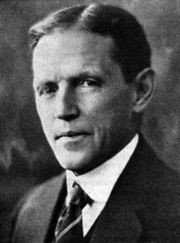
Dr. William Horatio Bates (1860–1930) was, at the time, one of the best ophthalmologists working in renowned New York hospitals; an ophthalmology lecturer; and also ran a private practice. He devoted his entire life to the study of eye function and the vision process.
In 1920, he published the book Perfect Sight Without Glasses, in which he disagreed with the generally accepted Helmholtz theory of vision (which is still used in ophthalmology today). This theory holds that sharp vision depends on tiny ciliary muscles located inside the eye, which supposedly "control" the thickness of the lens. Helmholtz attributed the primary role in accommodation to them. Dr. Bates concluded that the main tool of accommodation is not the lens, but the external eye muscles, responsible not only for eye movements but also for lengthening and shortening the entire eye in its anterior-posterior axis (similar to a camera lens or binoculars). Bates described experiments on animals and patients that, in his view, confirmed this theory (Perfect Sight Without Glasses, 1920, ch. 4–6); mainstream ophthalmology, however, continues to attribute accommodation primarily to the lens.
He explained clear vision of close objects by the work of the two (external) oblique muscles, which flatten (lengthen) the eyeball — much as a ball flattens when you sit on it — while precise vision of distant objects involved the work of the four (external) straight muscles, contracting ("shortening") the eye in the opposite direction. Bates' view that the eye functions in this way (through the extraocular muscles) is supported by unexplained cases of clear vision in people who, for one reason or another (e.g., cataracts), had their lens removed or were born without one.
What seems most notable about Bates is his approach to the patient and their illness. Bates did not wonder, as almost all ophthalmologists do, how to choose the best glasses for the patient. He thought about how to really help a given patient, that is, how to cure them of their ailment so they could see normally. The main assumptions of Bates' theory are:
- Recovering Good Vision is Possible
One of the basic assumptions of Dr. Bates was the statement that just as a broken limb can be brought back to full functionality through exercises and rehabilitation treatments, so can the organ of vision be restored to full functionality, meaning visual acuity, without the need for glasses.
- Rejecting Artificial Lenses and Glasses
According to Dr. Bates' assumptions, glasses and artificial lenses are to the eyes what crutches are to a person with a healed broken leg. A person with a vision impairment, if they do not reject their own crutches for the eyes (which are glasses) and undertake rehabilitation treatments, i.e., re-education and improvement of the visual organ, will never achieve improved vision; on the contrary, they can only expect a worsening of their vision quality and the need for stronger lenses prescribed by an ophthalmologist.
- Visual Acuity is Variable
One of Bates' theoretical assumptions was the statement that visual acuity changes from good to bad and vice versa, depending on the physical and emotional state of a given person. Bates noticed that vision is not constantly at one level of quality but changes continuously.
- Re-educating Vision: Getting Rid of Bad Habits
Dr. Bates concluded that most of the impairments hindering the process of vision are caused by improper use of the visual organ. Bad habits of using the eyes are always closely related to strain and tension, and this tension affects the entire body as well. Dr. Bates discovered that by learning good vision techniques (particularly relaxation techniques), the tension in the eyes and the whole body is reduced. He observed this when his patients learned methods of relaxing the eyes and mind, which directly improved their vision and reduced their refractive errors.
- Relaxation: The Key to Success
In Dr. Bates' method, the ability for passive and dynamic relaxation is the first and most basic technique that leads to improved vision. By relaxation, we mean not only the general skill of relaxing muscles but also mental relaxation, without which the process of vision is not possible. The relaxation techniques that Bates used proved sufficient in many cases to achieve improved vision for many of his patients.
- Basic Techniques Used by Bates
Here we will only list the basic techniques Bates used with his patients, which produced surprising results in treating vision impairments. These techniques will be described in detail in the appropriate sections of our portal. These will include: body and eye relaxation, palming, central fixation, sunning, swinging, visualization, blinking, micro eye movements, flash technique, analytical looking, and many others that we will try to discuss here.
Before you start, visit an ophthalmologist
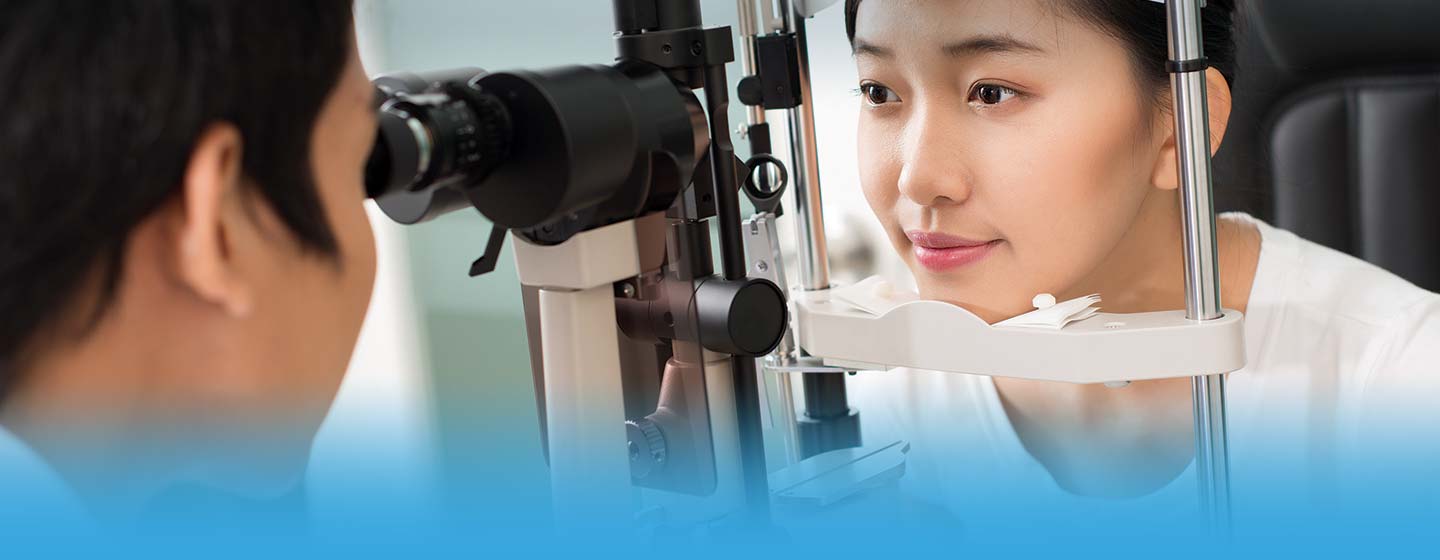
Visiting an ophthalmologist is important for several reasons. First, they will determine your vision defect, which will facilitate choosing exercises for a specific defect and serve as a benchmark for vision improvement. A specialist visit also allows for the identification of unusual changes in the eye, degenerations, tumors, and other eye diseases that may contraindicate the exercises described here.
Glasses and contact lenses

To perform the exercises presented here, the eye must try to work, and it won't do this if we put on well-fitted "prosthetics" such as glasses. Generally, we recommend the following approach:
- For vision defects of 1 diopter or less, exercises should be performed without glasses. People with such defects should stop wearing glasses altogether. Exception: when driving a car, wear the lenses prescribed by your ophthalmologist.
- For vision defects greater than 1 diopter, buy glasses about 1 diopter weaker and use them for exercises and daily wear. Exception: when driving a car, wear the lenses prescribed by your ophthalmologist.
- People wearing contact lenses should stop using them (they cannot be used effectively for exercises) and buy glasses (see points 1 and 2 above). Alternatively, you can exercise in the morning and evening, before putting in your contact lenses, and do mainly relaxation exercises during the day.
Using lenses weaker than your full prescription makes your eyes work. At first, it will certainly be an effort, but after a week or two you will see how much stronger your eyes become. You will start recognizing things that were previously very blurry and practically invisible.
So remove your eye "prosthetics" and get to work...
Nutrition and supplements

- Listen to your own body. It will tell you what it needs at any given moment. If you crave something sour, sweet, salty, etc., eat something that is sour, sweet, or salty. Of course, this does not mean eating 10 donuts a day or visiting McDonald's every other day. Learn to distinguish your body's needs from cravings.
- You've probably heard the phrase "eat lots of fruits and vegetables" many times. Well, we agree with that, but we would like to add a few more food groups to consider: dairy, meat, fish, bread, butter, sweets, nuts, fresh and dried fruits, and vegetables. It's important to consume them in moderation, as maintaining a balanced diet is crucial for overall body health.
- Make sure to stay hydrated by drinking an ample amount of water throughout the day. Aim for 1–2 liters of water per day, rather than relying solely on a couple of cups of tea.
Recommended Daily Practice Duration
A frequently asked question is about the ideal duration for daily practice. The simple answer is: devote as much time as you can. If you only have 5 minutes a day to spare for your eyes, then make the most of those 5 minutes. If you're able to dedicate 1.5 hours each day, that's fantastic. A personalized plan, tailored to your specific visual needs and daily availability, can be accessed in the exercise plan generator section.
It's crucial to remember not to overwhelm yourself with too many exercises at the start. Gradually increase your practice time, always keeping in mind the vital importance of relaxation. Devote the majority of your time to relaxing exercises. The more intensive exercises that put more strain on your eyes should be used in moderation. Be attuned to your body, particularly your eyes. They will signal when you've overexerted and need a break. If you feel that you've strained your vision, use one of the relaxation exercises, primarily palming.
Vision exercises are fundamentally different from weight lifting or other muscle-strengthening workouts. They focus more on muscle relaxation than on muscle building. This concept is key to success, but it's not easy to grasp, since dynamic and passive relaxation of the eyes and the entire body are relatively unknown and rarely practiced in our culture.
How long to exercise to improve vision?

Most people notice the first signs of improved vision after just 2 weeks. However, a lot depends on the size of your vision defect and your commitment to the exercises (at least half an hour a day, plus wearing the appropriate glasses). On average, you can assume that for simple vision defects, the improvement will be around 0.5 diopters within 2–3 months, with at least 2 exercise sessions per day of 20 minutes each. For more concrete results — especially those measurable by an optometrist — you will have to wait longer.
Let's be honest, though: it's impossible to achieve success in half a year for significant defects that have developed, for example, over 10 years. The return to normal vision will be gradual but can be achieved in a much shorter time than it took for the defect to develop.
As with many other aspects of life, there may come a time during vision exercises when you feel discouraged or tired, see no visible progress, or even experience a temporary deterioration in vision. How should you cope with this? In our experience, we suggest taking a break from vision exercises for a week or two and doing something else.
Go swimming or to the movies a few times, visit distant relatives — in other words, take a mini "vacation from exercises." The most important thing is not to fall into discouragement and apathy, as they may undermine the results you have already achieved and the time you have invested.
Sources & further reading: W. H. Bates, Perfect Sight Without Glasses (1920) — full text at Wikisource: what glasses do to us (ch. 8) · the cause of refractive errors (ch. 9) · central fixation (ch. 11) · palming (ch. 12) · shifting and swinging (ch. 15) · home treatment (ch. 24). A later popularization of the method: Leo Angart, Improve Your Eyesight Naturally. The Bates method remains scientifically contested and is not accepted by mainstream ophthalmology — we describe our approach on the about page.